



The Pinterest Trick Printable Sellers Use to Get Traffic While They Sleep
If you’ve been trying to market printables on “normal” social media lately, you’ve probably felt it: the grind.
Post every day. Chase trends. Film reels. Watch your reach swing wildly for reasons you can’t control. One week you’re visible. The next week it’s like you vanished.
Pinterest is different.
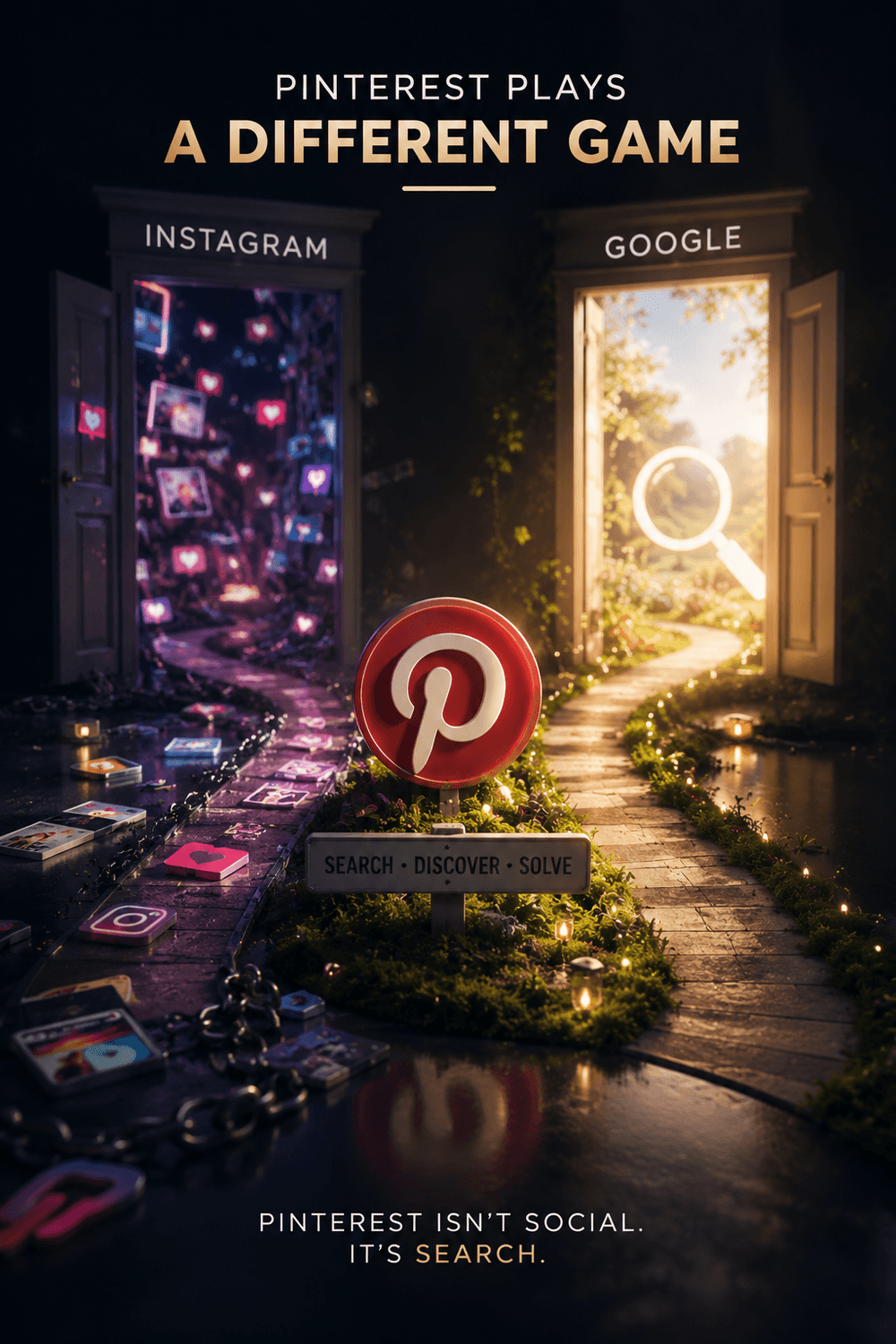
Not because it’s easier. Not because it’s magic. But because Pinterest isn’t really a social platform in the way most people think. It behaves more like a visual search engine—closer to Google than Instagram. And that one shift in perspective changes everything for printable sellers.
This post is a summary of the core idea: if you sell digital downloads (coloring pages, planners, worksheets, wall art, journals, templates), Pinterest can become a long-term traffic asset that compounds instead of disappearing.
The Whole Strategy In One Sentence
Pinterest rewards relevance + usefulness + consistency—and printables fit that ecosystem naturally because they’re fast to use and easy to save for later.
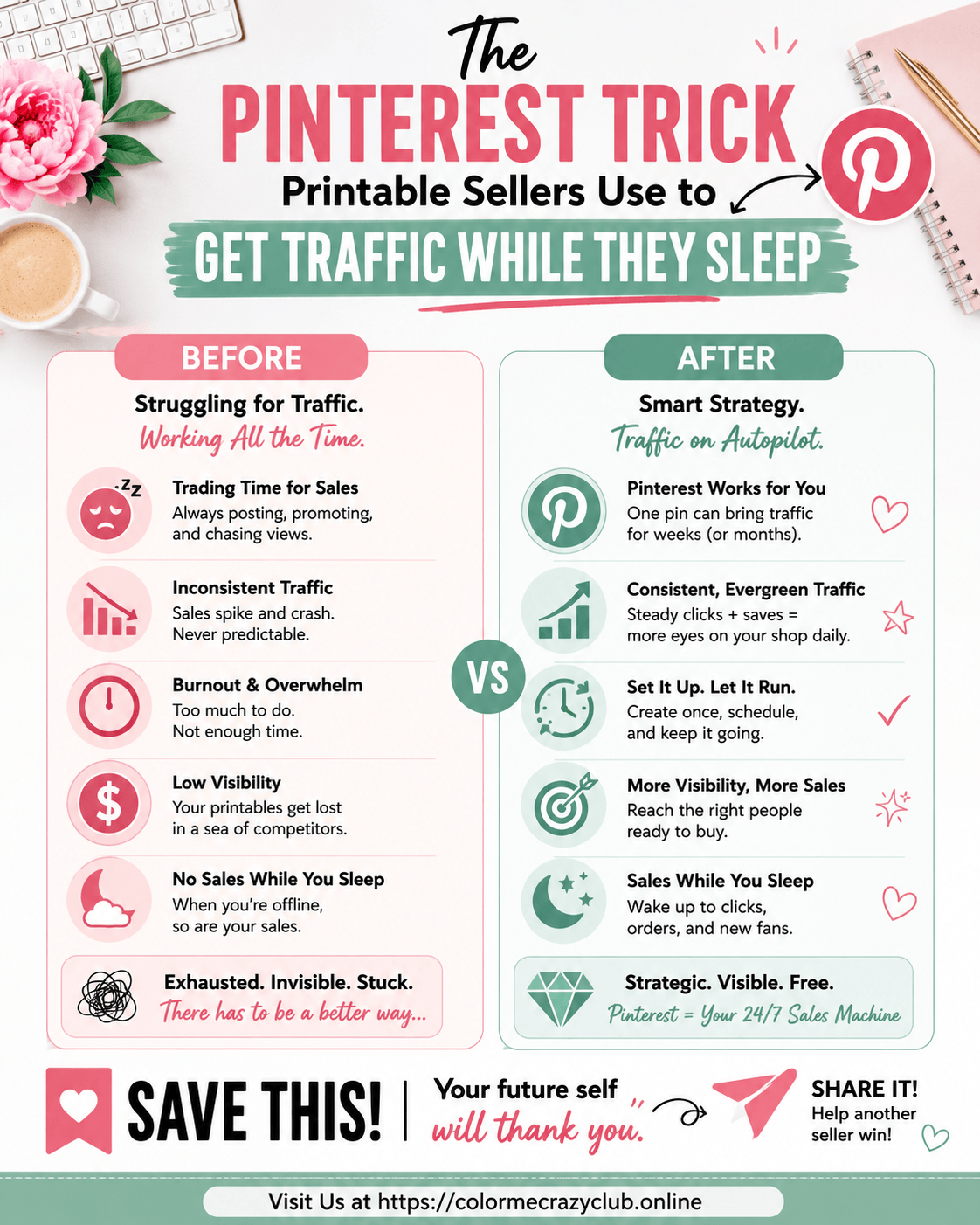
Pinterest isn’t competing with Instagram (it’s competing with Google)
Most creators treat Pinterest like a place to “post pretty stuff.” That’s why they get frustrated.
Pinterest is built around discovery behavior:
People search for what they want
They save what they might want later
They click when they’re ready
That’s search intent.
On entertainment-first platforms, your content interrupts people. On Pinterest, people go looking for content. They arrive with a goal already forming in their head.
That difference matters because it changes the quality of the click. Pinterest visitors often show up already leaning forward—already imagining the outcome they want.
Why printables are quietyly perfect for Pinterest
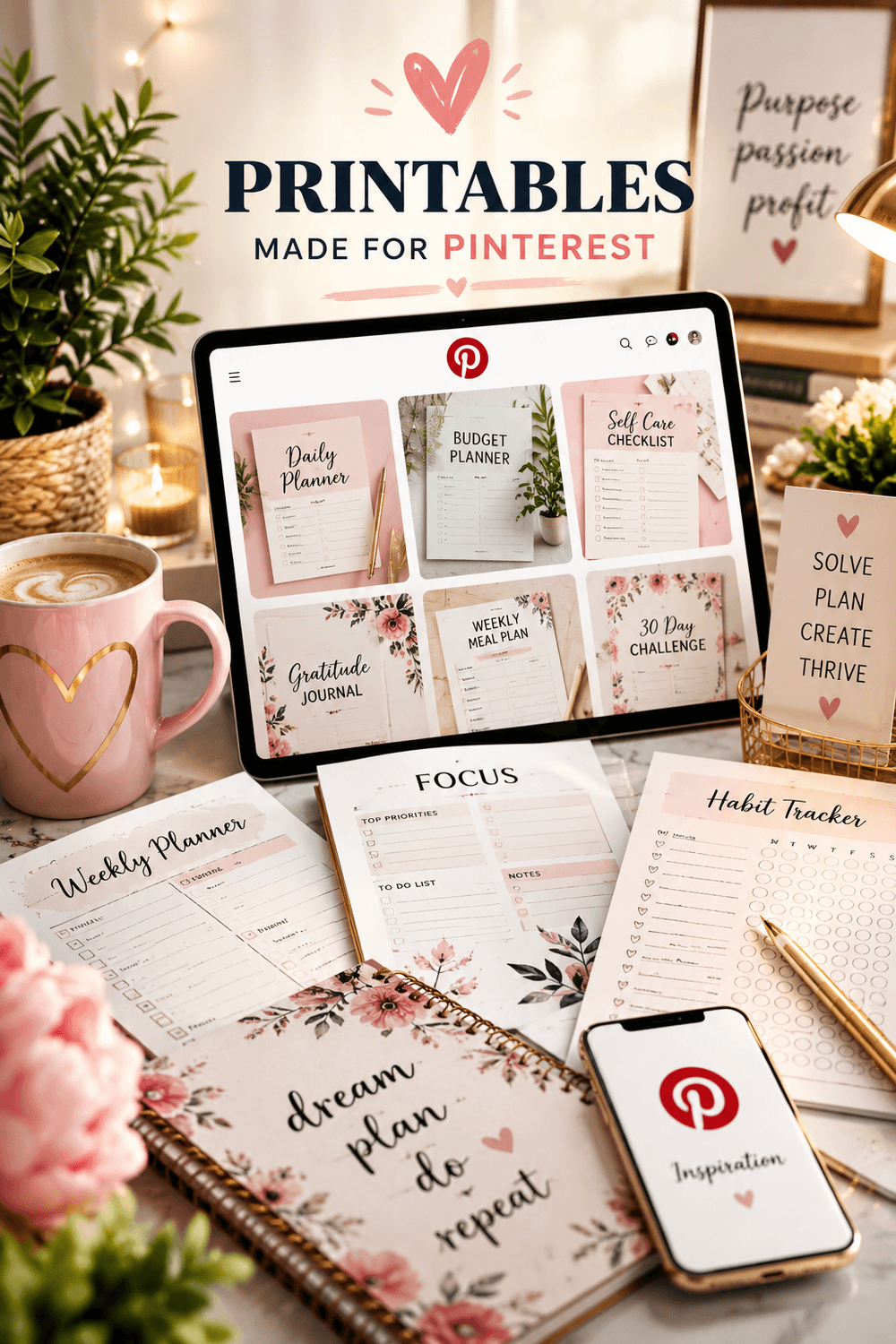
Printables solve immediate friction.
Sometimes that friction looks practical:
“I need a better routine.”
“I need to get organized.”
“I need something for my kids.”
“I need a plan for my budget.”
“I need a calming hobby.”
But underneath the practical problem is usually something emotional:
relief
control
calm
creativity
confidence
Pinterest is basically an “aspirational identity” platform. People save things that represent the life they want to step into.
A pin is rarely just a pin.
It’s future self-storage.
And printables slide into that behavior perfectly because they feel actionable. A printable doesn’t say “wait two weeks for shipping.” It says:
You can start today.
That short loop—see it, click it, download it, use it—creates momentum.
The real metric on Pinterest isn't likes (it's saves)
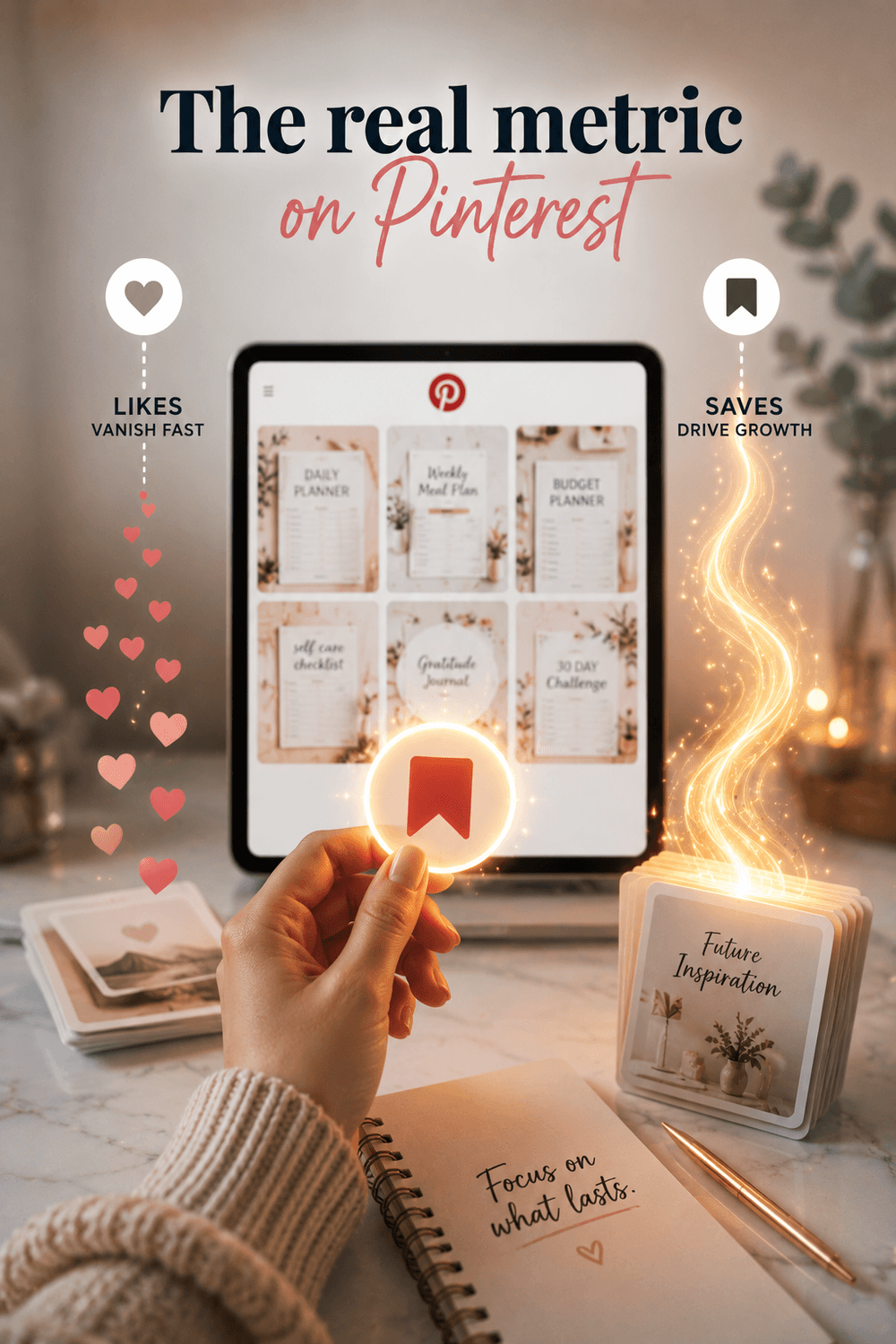
On most platforms, creators obsess over likes.
Pinterest creators pay attention to saves.
Because a save usually means:
Not now… but probably soon.
That’s huge.
A save is a signal that someone is collecting pieces of a future version of their life:
the organized person
the calm parent
the creative adult
the productive entrepreneur
the person who finally gets their finances together
When your product is a printable, the distance between inspiration and execution is tiny. That’s why Pinterest traffic can convert differently than traffic from entertainment platforms.
Why Pinterest traffic lasts longer than almost anything else
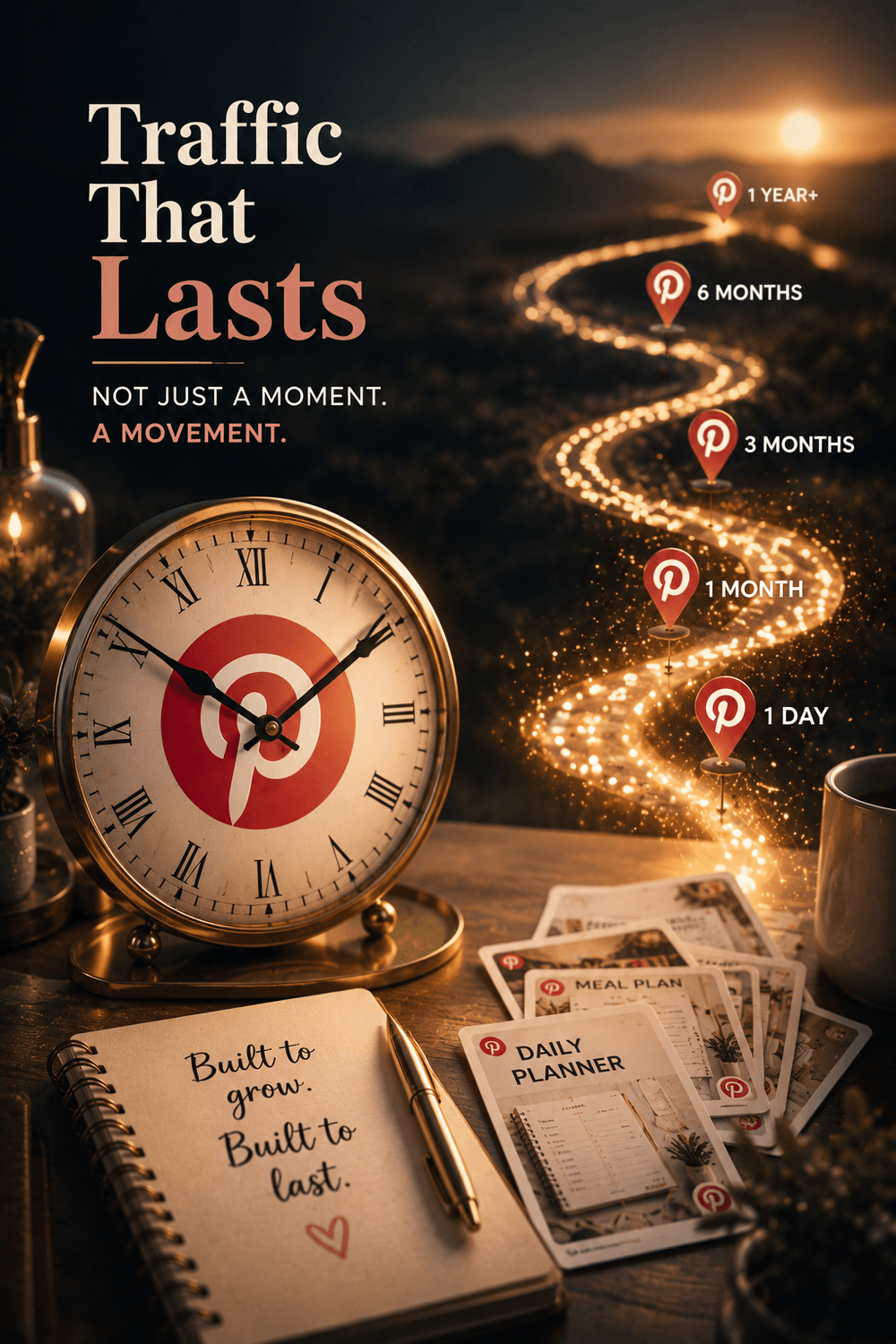
This is the part that turns Pinterest into a real business asset.
A TikTok post might disappear in 48 hours.
An Instagram post might be dead tomorrow afternoon.
A strong Pinterest pin can send traffic for months—sometimes longer—because Pinterest indexes content and resurfaces it based on relevance.
That changes the economics of content creation.
Instead of constantly feeding a machine that forgets your work, Pinterest lets you build searchable entry points over time.
Each pin becomes another door into your ecosystem:
a blog post
a product page
a freebie
a category hub
You’re not chasing spikes. You’re building indexed visibility.
Most printable sellers use Pinterest wrong (and it’s fixable)
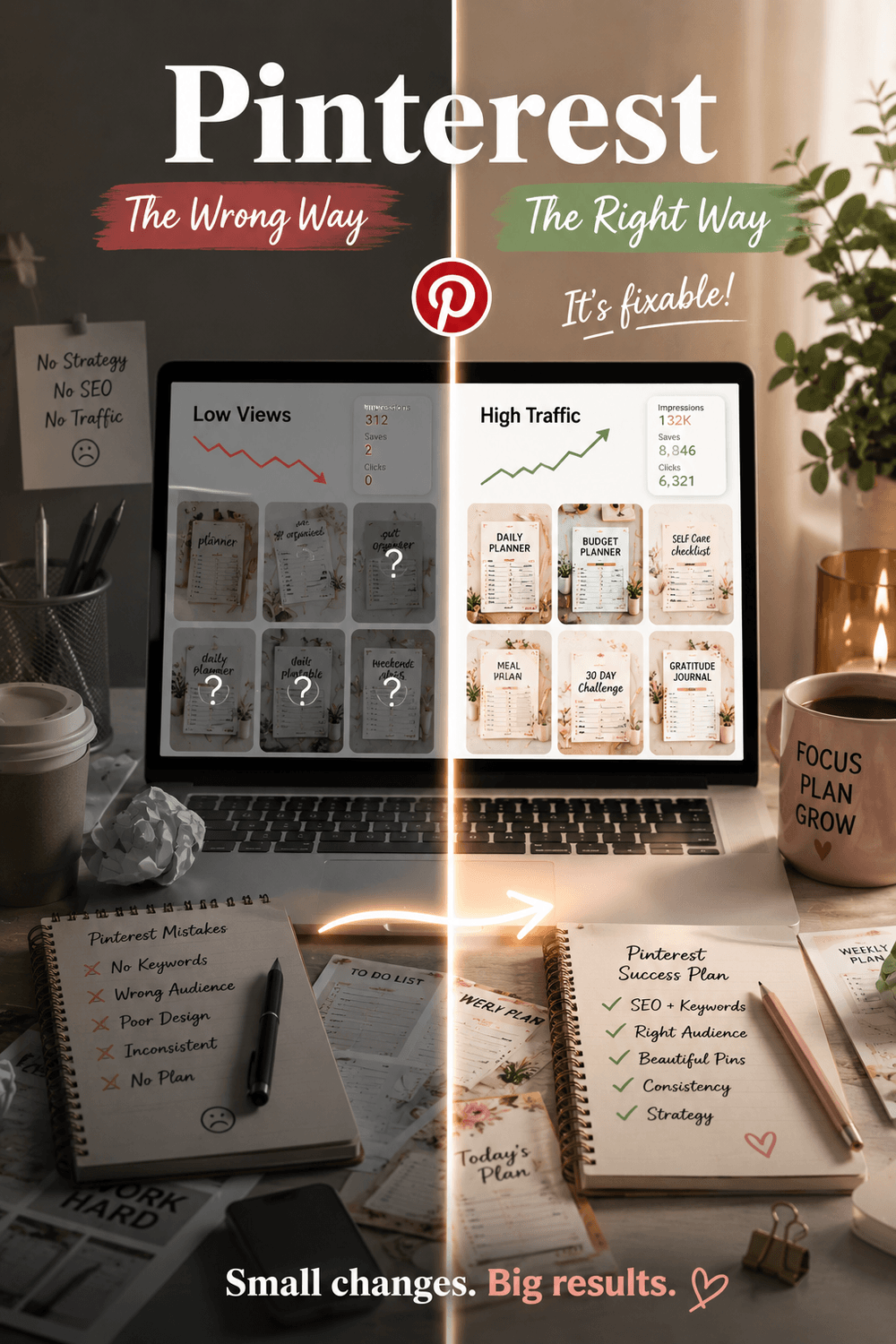
The most common mistake is bringing social media habits to a search platform.
That usually looks like:
posting random graphics with no keyword structure
using vague board names that don’t match real searches
focusing on aesthetics while ignoring discoverability
Beautiful pins help. But beautiful pins without search alignment rarely compound.
Pinterest still runs on specificity.
Here’s the difference:
Weak: “Planner Printable”
Strong: “Minimalist Weekly Meal Planner Printable PDF for Busy Moms”
The second option carries intent. Pinterest understands what it’s about, who it’s for, and why it matters.
Curiosity beats “perfect design” more often than you think
Some pins fail quietly because they explain too much too fast.
Others create tension.
Curiosity.
An unfinished loop that the brain wants to close.
Instead of:
“Budget Binder Printable”
Try something that carries emotional movement:
“The simple budget binder that helped me stop feeling broke every month.”
Now the click isn’t about paper templates.
It’s about relief.
That’s what Pinterest users are already looking for while they scroll: the next step toward a better version of their life.
The printable businesses winning on Pinterest build ecosystems
The sellers who grow steadily on Pinterest usually aren’t building isolated products.
They build connected pathways.
One coloring page becomes:
a themed set
a bundle
a seasonal collection
a blog post with tips
a free sampler
a related product recommendation
One planner becomes:
a niche-specific version
a matching tracker
a printable routine kit
a blog post that teaches the method
Everything connects.
And that structure strengthens topical authority—both for Pinterest and for search systems that evaluate your site.
Modern discovery rewards connected expertise, not scattered content.
Why Pinterest feels less exhausting (especially for builders)
Pinterest doesn’t demand constant performance energy.
You don’t have to be an entertainer.
You don’t have to document your whole life.
You don’t have to fight for attention every day.
Pinterest rewards:
usefulness
clarity
relevance
consistency
For a lot of printable creators—especially introverts, busy parents, or anyone building quietly from home—that feels sustainable.
It creates room for slower compounding growth.
And ironically, that slower growth often becomes more stable.
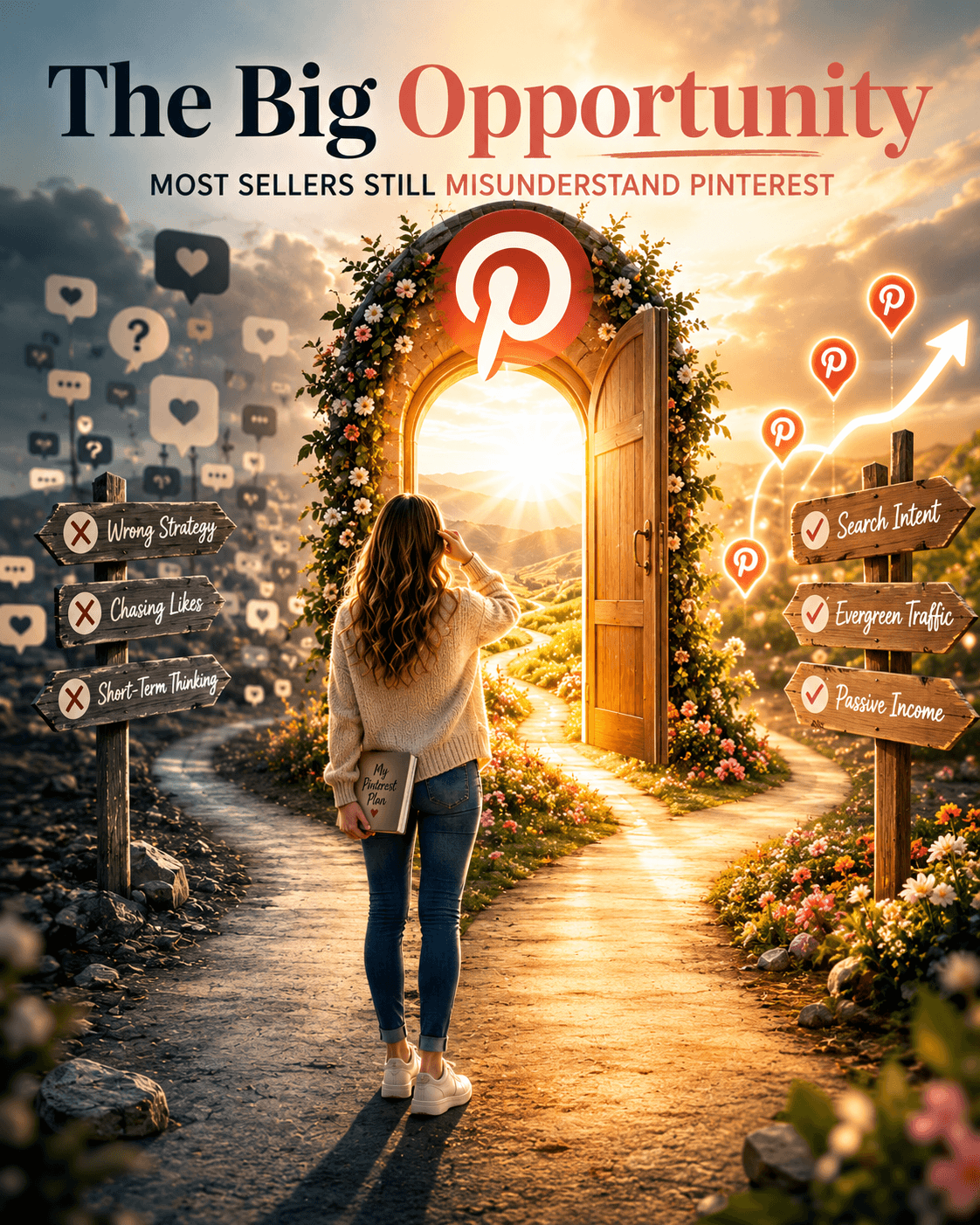
The big opportunity: most sellers still misunderstand Pinterest
Pinterest’s advantage isn’t just that it exists.
It’s that most digital sellers still treat it like social media.
Meanwhile, Pinterest continues connecting people with solutions they are actively searching for:
planners
coloring pages
worksheets
journals
checklists
templates
printable resources
Printables are naturally positioned to satisfy the exact behavior Pinterest encourages:
discover → save → click → download → use
The sellers who win over the next few years won’t necessarily be the ones posting the most.
They’ll be the ones building the most relevant, useful, searchable ecosystems.
That’s where sustainable traffic growth starts.
Next step (simple and practical)
If you want a quick win you can use tonight, start with something that’s easy to say yes to: a free sampler.
It gives Pinterest users a low-friction way to try your style, and it gives you a clean entry point into your ecosystem.
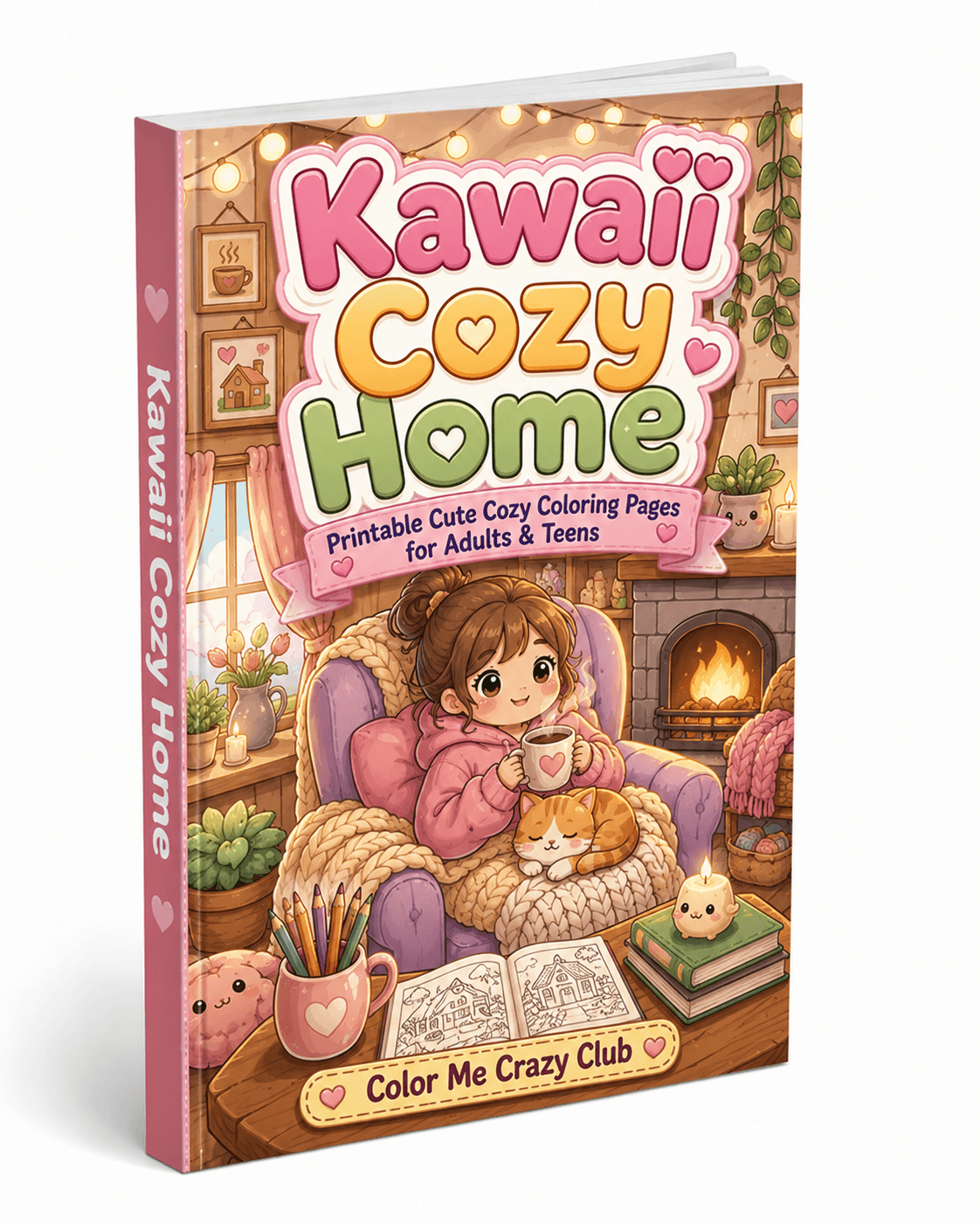
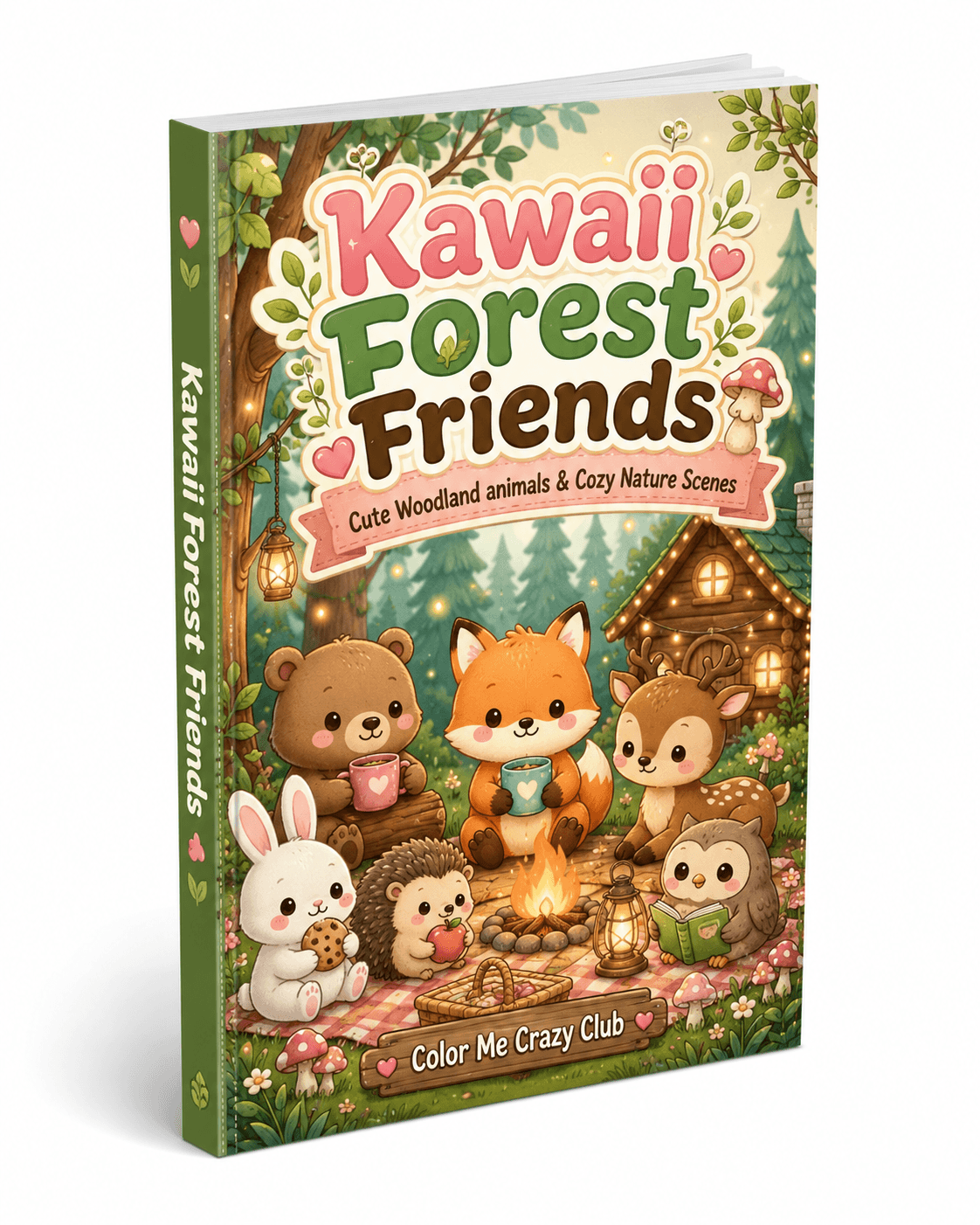
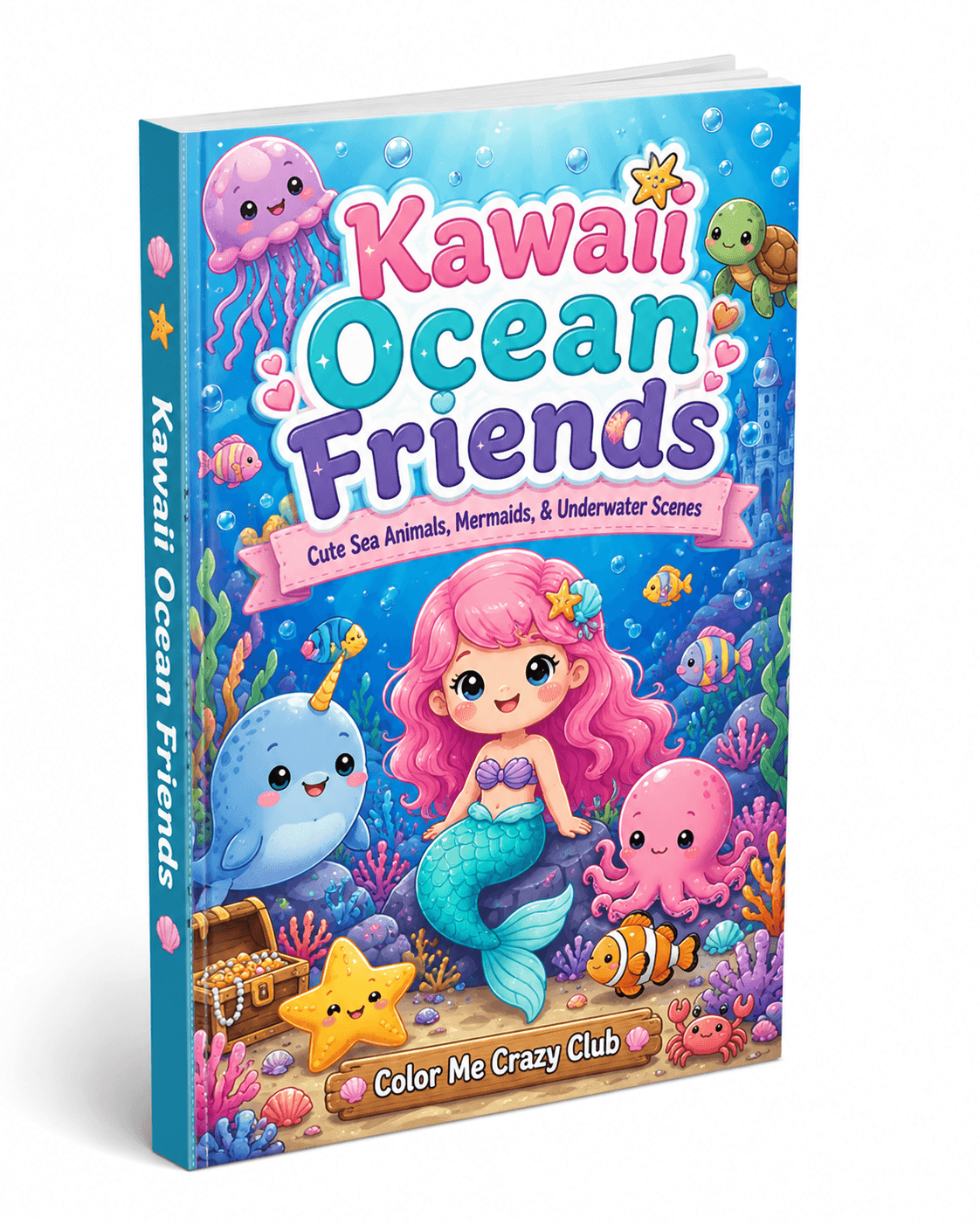
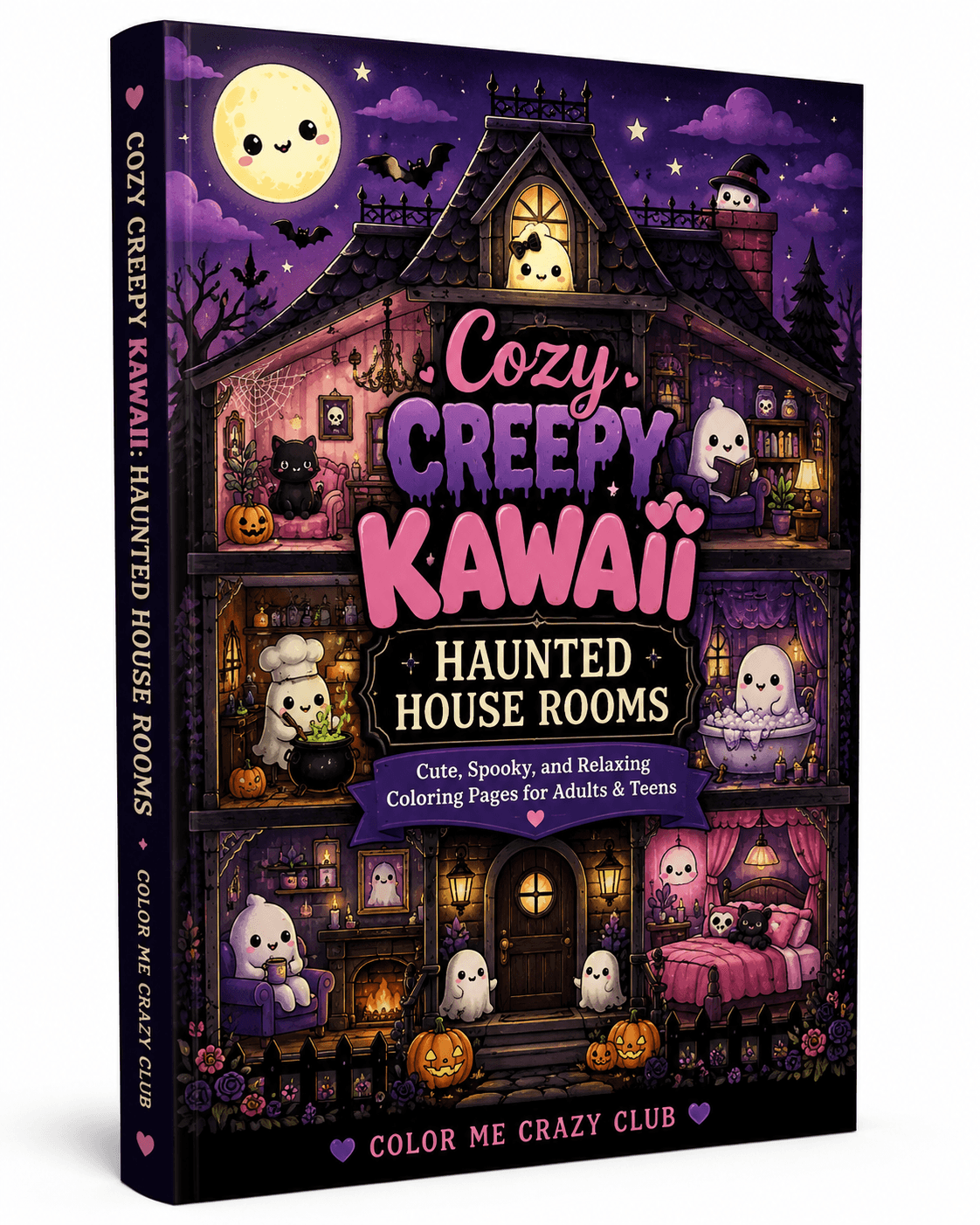
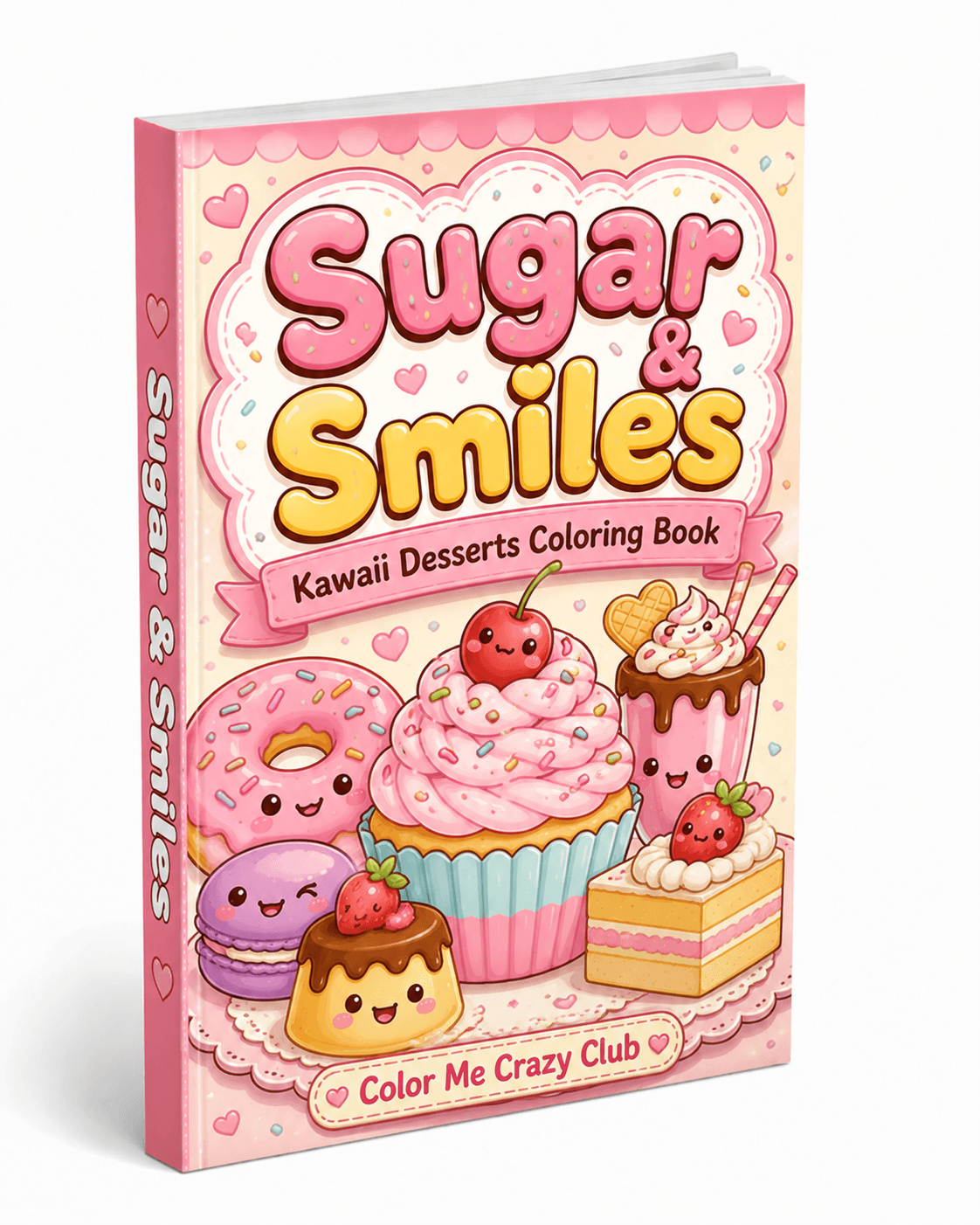
Download the Free Kawaii Mega Sampler, print one tonight for a quick decompress, and see how it feels on your printer and paper:
Frequently Asked Questions
Can a Pinterest pin really send traffic for months?
Yes.
In many cases, traffic continues long after publication because Pinterest functions as a search engine rather than a traditional social network.
As long as users continue searching for the topic and engaging with the content, Pinterest has a reason to keep showing it.
That's why some creators still receive clicks from pins they published months or even years ago.
Why does Pinterest traffic often convert better than social media traffic?
Because the user arrives with intent.
Someone scrolling social media is usually looking for entertainment.
Someone searching Pinterest is usually looking for a solution.
That difference dramatically changes behavior.
People searching for printable planners, worksheets, coloring pages, or journals are often much closer to taking action.
How many pins should I create for one printable?
More than one.
Usually much more than one.
Different designs, headlines, keywords, and audience angles allow Pinterest to test your content across multiple search environments.
One printable can support dozens of traffic opportunities.
Do I need thousands of followers on Pinterest?
No.
Pinterest places far more emphasis on relevance than follower count.
A well-optimized pin from a small account can outperform content from accounts with much larger audiences.
Search intent matters more than popularity.